
Malaysia Embodied Intelligence & Humanoid Association
MEIHAEmbodied Intelligence & Humanoids

ASEAN landscape

What each ASEAN economy brings to the robotics supply chain, and where Malaysia fits among its neighbours.

Last updated 8 October 2026 · Methodology

At a glance

ASEAN is becoming the second home of the robot supply chain

Chinese robot and component makers are expanding into Southeast Asia. Each ASEAN economy is competing for a different part of that investment.

818

Robots per 10,000 employees in Singapore, second in the world after Korea.

IFR, April 2026 (via The Robot Report)

THB9.22bn

Five Chinese humanoid-parts plants approved in Thailand in February 2026.

Thailand BOI via Thairath

US$6bn

CATL battery joint venture under construction in Indonesia.

CnEVPost, Jun 2025

US$49.6bn

Philippine electronics exports in 2025, 58.8% of the country's exports.

SEIPI

Country profiles

What each economy brings

Malaysia

Integration and electronics

MEIHA home
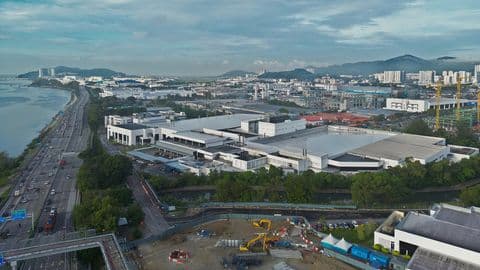
Aerial view of factories in the Bayan Lepas Free Industrial Zone, Penang
Bayan Lepas Free Industrial Zone, Penang, 2023Photo: HundenvonPenang, CC BY-SA 4.0, via Wikimedia Commons

Malaysia's semiconductor, electronics, precision engineering and automation base, and how it connects to embodied AI.

  • In August 2026 the Deputy Minister of Investment, Trade and Industry asked MARii to study how Malaysia’s roughly 730 automotive vendors could enter the humanoid robot supply chain. No formal programme exists yet.

Malaysia capability map

Thailand

Humanoid components

Moving first

Thailand has secured the first humanoid-robot parts production outside China: five Chinese plants worth THB 9.22 billion approved in February 2026.

  • Hangzhou Seenpin: planetary roller screws, THB 2.12 billion, Chonburi
  • Beite Technology: ball screws, THB 1.67 billion, Chonburi
  • Sanhua Intelligent Drives: actuators, THB 1.8 billion, Chonburi
  • Tuopu: actuators, THB 930 million, Chachoengsao
  • Xusheng: joints and body parts, THB 2.7 billion, Rayong
  • A BOI measure of March 2026 offers duty exemptions and up to 100% corporate tax exemption for three years on automation in auto plants, with the higher rate for buying from Thai automation makers.

Singapore

R&D and testbeds

Research hub

The world's second most automated economy by robot density, strong in research, start-ups and real-world testing.

  • National Robotics Programme led by A*STAR, and the RoboNexus accelerator launched in March 2025.
  • Punggol Digital District physical-AI testbed with trials by firms including Unitree, Slamtec, Grab, DHL and Certis.
  • AGIBOT entered Singapore in October 2025.

Vietnam

Electronics assembly

Rising

A fast-growing electronics assembly base with a national semiconductor strategy to 2030.

  • National semiconductor strategy to 2030 with a vision to 2050 (Decision 1018, September 2024).
  • VinMotion, founded by Vingroup in January 2025 with VND 1,000 billion, develops humanoids first for VinFast factories.

Indonesia

Battery materials

Upstream

The world's largest nickel producer, building battery materials and cell capacity.

  • Nickel ore export ban since 2020 pushed processing onshore.
  • CATL–Antam–IBC battery joint venture of about US$6 billion broke ground in June 2025; Karawang cell plant due by the end of 2026.

Philippines

Semiconductor services

Electronics

Electronics made up 58.8% of exports in 2025, mostly semiconductor manufacturing services.

  • US$49.6 billion electronics exports in 2025.
  • CREATE MORE Act (November 2024) cut corporate tax for registered enterprises to 20%.

Regional frameworks

ASEAN-wide rules and agreements

  1. May 2026

    ASEAN Digital Economy Framework Agreement

    Signed, not in forceTrade agreement · May 2026Watch: 15 Nov 2026

    Negotiations concluded in May 2026; signing targeted for the 49th ASEAN Summit in November 2026.

    Signing targeted at the November 2026 ASEAN Summit.

  2. 2025

    ASEAN–China FTA 3.0 upgrade

    Signed, not in forceTrade agreement · 28 Oct 2025Watch: 15 Nov 2026

    Signed in Kuala Lumpur, adding the digital economy, green economy, supply-chain connectivity, standards and customs facilitation. Enters into force 60 days after all parties ratify. Existing ACFTA origin rule: 40% regional value content or change of tariff heading, with cumulation.

    Entry into force targeted around the November 2026 ASEAN–China Summit.

  3. 2025

    ATIGA upgrade (Second Protocol)

    Signed, not in forceTrade agreement · 26 Oct 2025

    Upgrade to ASEAN’s internal goods agreement adding seven chapters and liberalising rules of origin. Enters into force 18 months after all members sign.

  4. 2024

    ASEAN Guide on AI Governance and Ethics

    In forceStandard · 2 Feb 2024

    Seven guiding principles for trustworthy AI, adopted by ASEAN digital ministers.

  5. 2022

    RCEP

    In forceTrade agreement · 1 Jan 2022

    Covers ASEAN, China, Japan, Korea, Australia and New Zealand. Usually 40% regional value content, a 10% de minimis for non-originating materials, and cumulation of originating materials.

Partners

Regional bodies MEIHA aims to work with

Prospective partners unless marked otherwise.

  1. TH

    Thai Robotics Society

    Professional and academic robotics society.

  2. TH

    Thailand Automation & Robotics Association

    Keeps a register of system integrators and works with Thailand’s BOI.

  3. SI

    Singapore Industrial Automation Association

    Industry association for automation, supported by Enterprise Singapore.

Sources